Standing all day with flat feet can be rough. Your feet throb. Your energy drains. The good news? There’s a smart way to fight back: arch support.
Yes, for flat-footed workers standing all day, arch support is often the secret. It provides critical structure, reduces strain, and boosts comfort, turning long shifts from painful to manageable.
I remember my early days working retail. Long hours on hard floors with my flat feet? It was a nightmare. My back ached, my knees complained. Then I found arch support. Let me show you how it can change your day.
What Exactly Are Flat Feet, and Why Does Standing Make Them Hurt More?
If “flat feet” sounds familiar, you’re not alone. Many people deal with this. Let’s understand the prevalence of flat feet and find out why standing all day can feel like such a challenge for us. Curious if you should wear arch supports for flat feet?
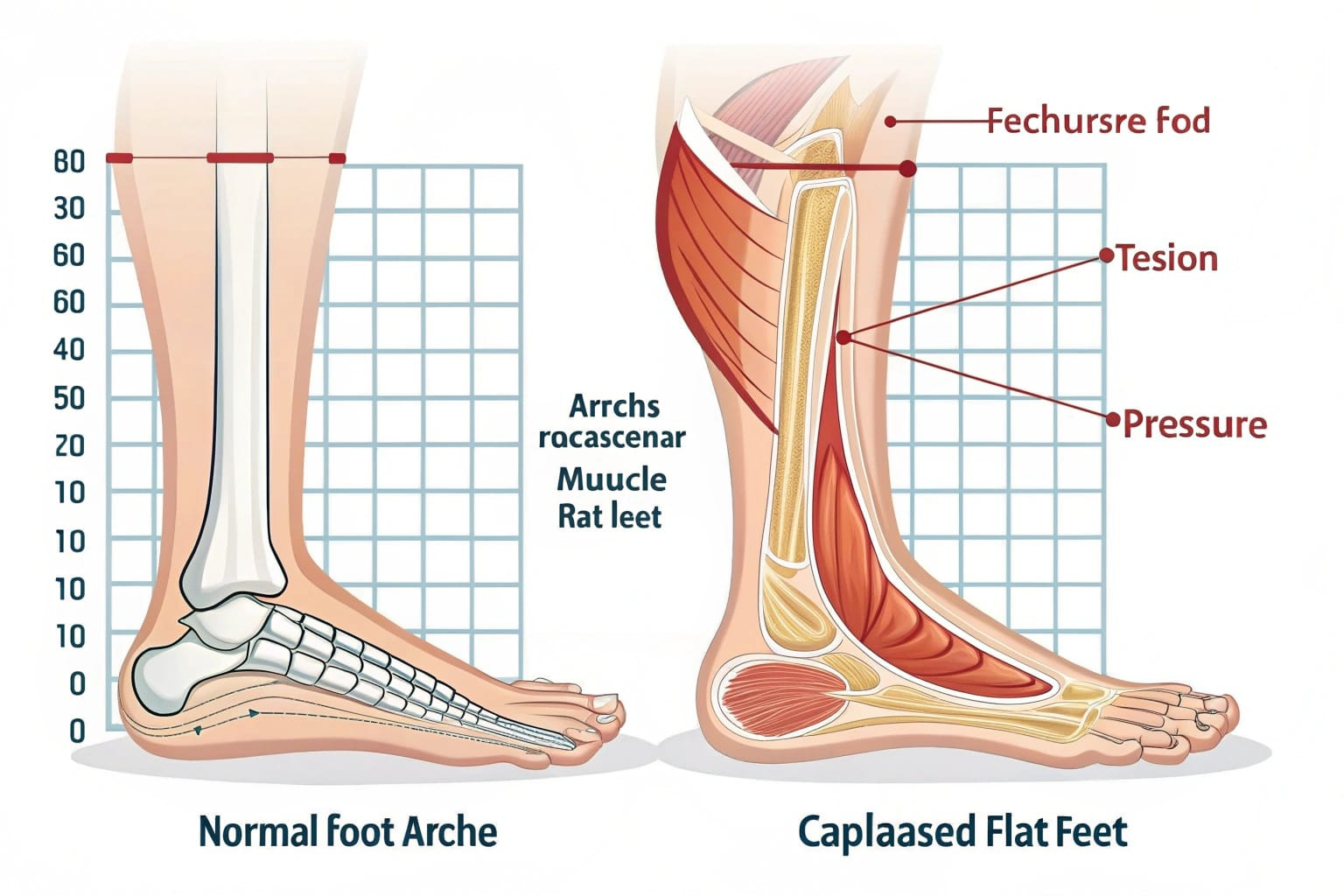
Flat feet mean your arches have collapsed or are very low. Standing all day with flat feet causes pain because your weight isn’t spread out right, straining unsupported arches.
Let’s dive deeper into this.
So, What Are Flat Feet Anyway?
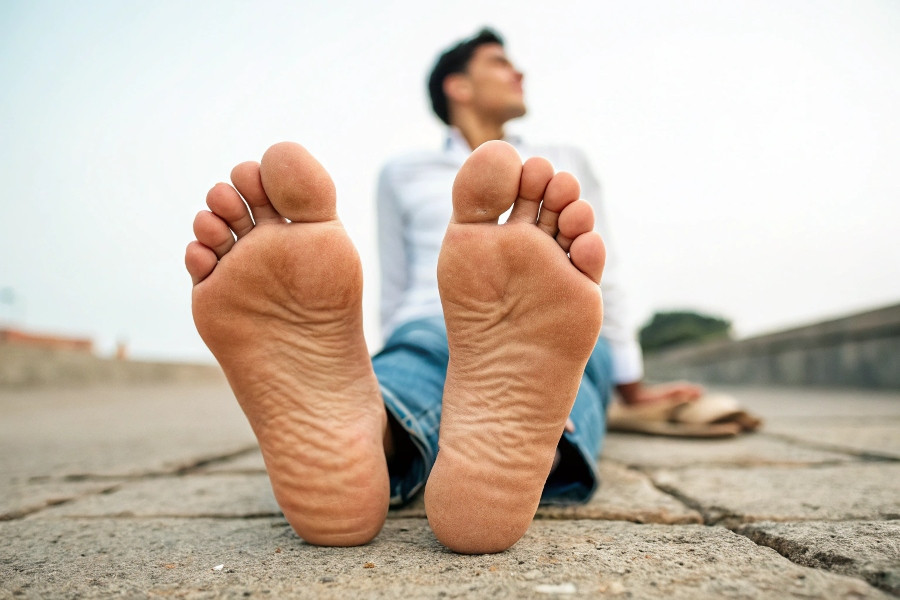
My feet? They’re pretty flat. This means the arch, that curved part on the inside of most feet, is lower than normal. Or it might be gone completely. This can happen if the tissues in our feet get weak. Sometimes, people are just born this way.
There are a few types:
- Flexible Flat Feet: With these, you see an arch when you’re sitting. But it flattens out when you stand up and put weight on your feet.
- Rigid Flat Feet: Here, the arch stays flat whether you’re sitting or standing.
For some folks, flat feet don’t cause any pain. We call these asymptomatic. But for others, like me before I found good solutions, it can be symptomatic. That means it hurts, sometimes a lot.
Why Does Standing All Day Feel Like a Punishment?
Think about it. When you stand, all your body weight presses down on your feet. If you have flat feet, a couple of things make this extra tough.
- Overpronation: The Inward Roll
Many people with flat feet find their feet roll inward too much when they walk or stand. This is called overpronation. It’s like your foot is trying to find support, but it ends up twisting your leg a bit out of its natural line. I definitely noticed my ankles feeling weak because of this. - Pressure Points Galore
Because the arch isn’t doing its job of supporting your weight, that weight doesn’t spread out evenly. Instead, certain spots on your feet take almost all the pressure. For me, it was the balls of my feet and my heels. This leads to tired, sore feet pretty quickly. - The Pain Chain Reaction
This isn’t just about sore feet. That inward roll and uneven pressure can cause a chain reaction of problems up your body:- Ankle strain or pain.
- Knee pain. My left knee was always the first to complain.
- Lower back pain. Oh, the joys of a sore back after a long shift!
- Swollen feet, especially at the end of the day.
How Does Arch Support Actually Help When You’re Standing So Much?
Okay, we know flat feet and long hours standing are a bad mix. But how can something as simple as an arch support insole make a real difference? How exactly does arch support help? It’s actually pretty smart.
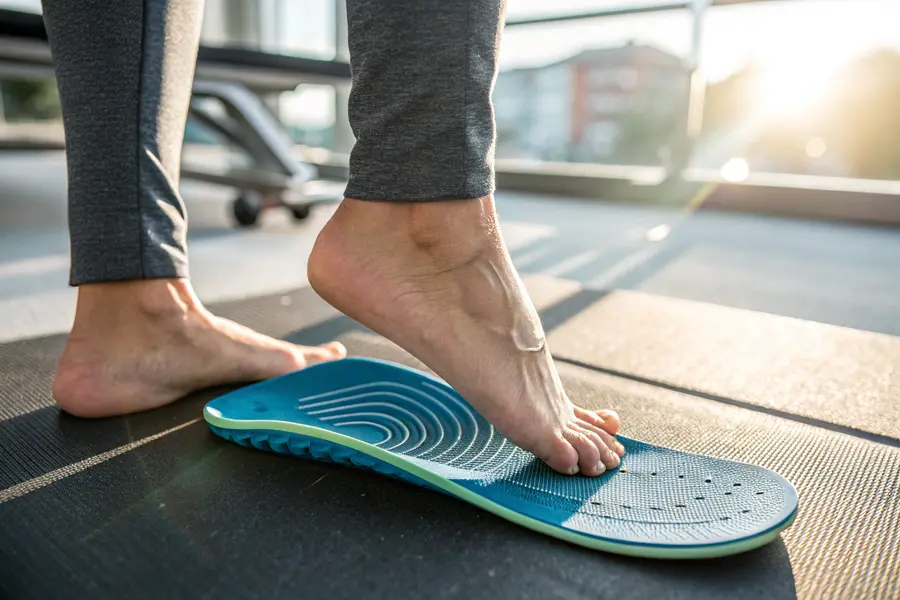
Arch support works by giving a supportive structure under your arch. This helps absorb shock from walking on hard surfaces. It also improves your foot alignment and spreads your weight more evenly. All this means less strain.
Let’s look at the details.
The Mechanics: What’s Happening Inside Your Shoe?
When I first slipped arch supports into my work shoes, the relief wasn’t instant like magic. But I noticed a clear change over a few days. Here’s what these supports do:
- Shock Absorption Like a Pro
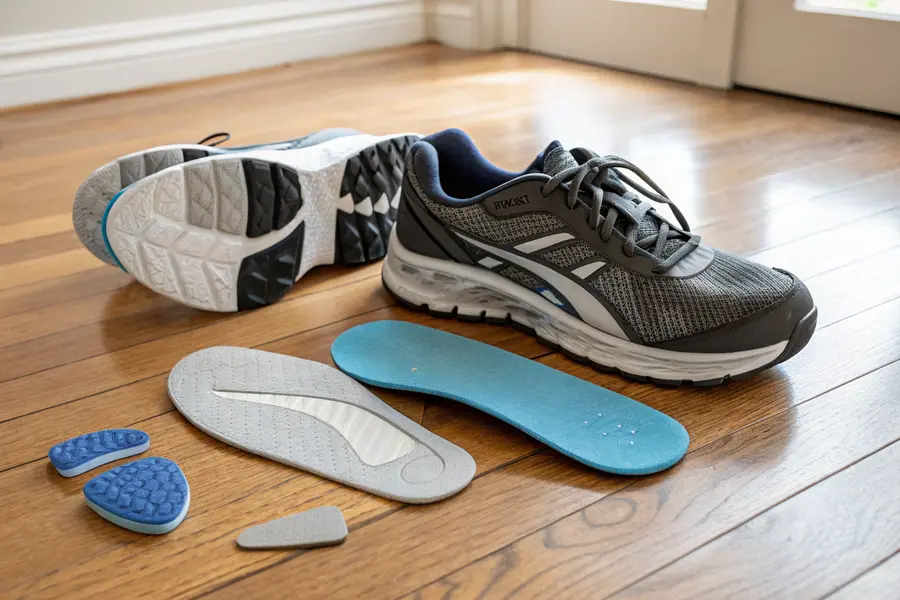
Good arch supports, like many Footcool insoles, often use materials like gel or special foam. These materials are fantastic at cushioning your foot. Every step you take, especially on hard floors, sends a little jolt up your leg. Arch supports help soak up that impact. Less shock means less stress on your feet and joints. - Bringing Stability Back
For those of us with flat feet, our foot structure isn’t giving us the natural stability we need. Arch supports help to rebuild that alignment. They act like a foundation. They balance how your weight sits on your foot. This made a huge difference in how “solid” I felt on my feet through the day. - Aligning Your Joints
Remember that overpronation we talked about, the inward roll? Arch supports gently guide your foot into a more neutral, natural position. This correction doesn’t just stop at your foot. It travels up. Your ankles, your knees, and even your hips can feel the benefit. My nagging knee pain actually started to fade after consistently using good arch support.
What Does Science Say About This?
It’s not just me saying this works. It’s not just a feeling. Studies have shown that using orthotics (that’s the technical term for supports like insoles) can really improve how people walk. This is called their gait mechanics. They also help cut down on those annoying overuse injuries that come from doing the same stressing movements over and over.
- Pressure Redistribution is Key
A big win from arch supports is how they redistribute pressure. Instead of certain “hotspots” on your foot taking all the punishment, the support helps spread your body weight more evenly. This happens across the entire sole of your foot. This single factor is huge for improving comfort when you’re on your feet all day.
What Are the Real-World Benefits of Using Arch Support if I Stand All Day?
So, arch support helps your foot mechanics. That’s great. But what practical difference does that make for you during your long workday? Trust me, the benefits are pretty awesome. It can change your day from feeling like an endurance test into something much more manageable and comfortable, essentially transforming your foot health and workday.
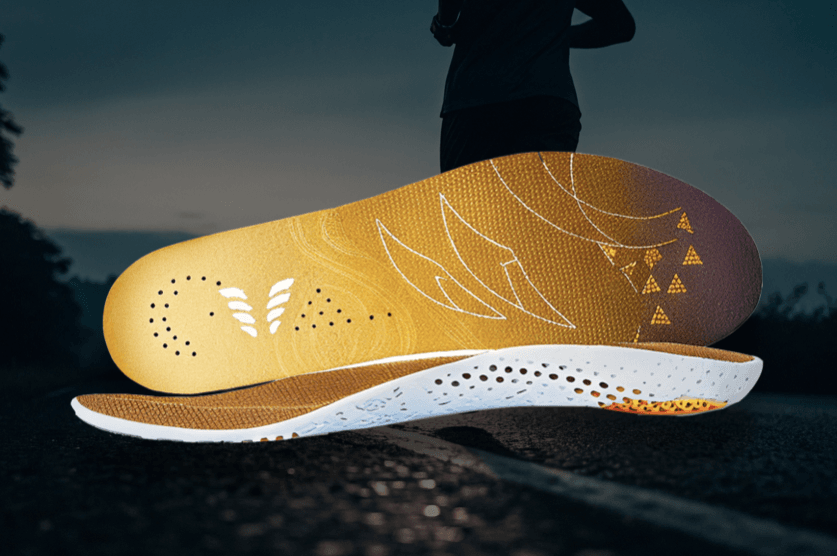
Using arch support can greatly reduce how tired your feet get. It can prevent chronic pain like plantar fasciitis. It can improve your overall posture. And it helps you handle the specific demands of a standing job much better.
Let’s break down these benefits.
Say Goodbye to Tired Feet (Mostly!)
When your arches are weak or flat, your foot muscles have to work overtime. They are trying to compensate for the lack of natural support. This is exhausting for them! Arch supports give those hard-working muscles a helping hand. By providing external support, they allow your muscles to work more efficiently. This means less energy is wasted just trying to stay stable. The result? Your feet feel much less tired at the end of the day. I noticed I wasn’t so desperate to kick off my shoes the moment I walked in the door.
Keeping Chronic Pain at Bay
Constant strain on flat feet can lead to some nasty chronic conditions. Plantar fasciitis is a common one. That’s the sharp, stabbing pain in your heel, especially in the morning or after resting. Arch support helps by reducing the tension on the plantar fascia. This is the ligament that runs along the bottom of your foot, from your heel to your toes. It also helps with general heel pain and arch discomfort. Think of it as preventative care for your feet. It stops small problems from becoming big ones.
Standing Taller and Straighter
This was a surprise benefit for me! When your feet are properly aligned thanks to good arch support, it has a positive knock-on effect on your whole body. Arch support helps to stabilize your gait – that’s the way you walk and stand. This stability can prevent your spine from getting misaligned. It also takes a lot of stress off your knees and hips. Better posture isn’t just about looking good; it’s about feeling good and reducing strain on your entire musculoskeletal system. Our Footcool insoles, with their dynamic arch support technology, are designed specifically to help with this kind of overall alignment.
Made for the Job: Support Where You Need It
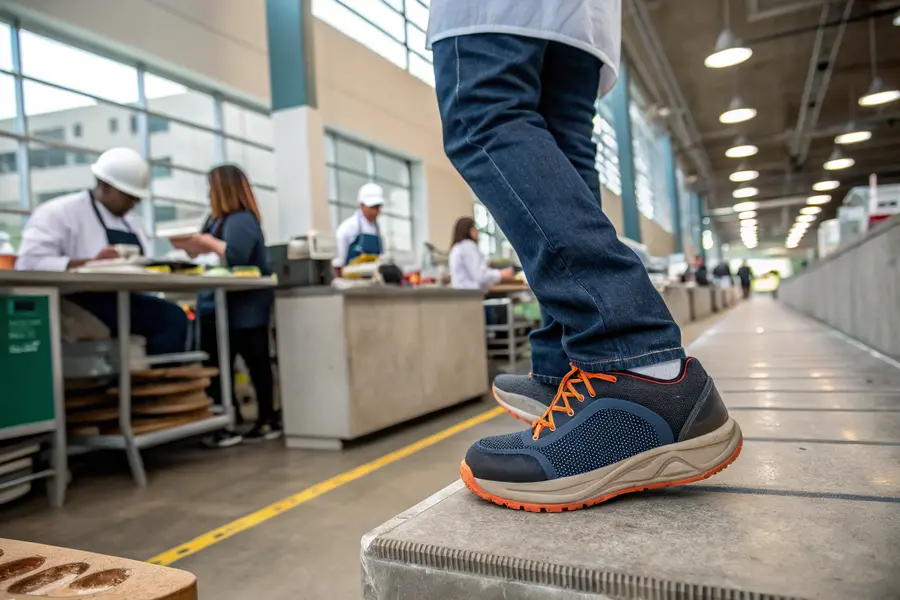
Certain jobs are just plain brutal on the feet. If you’re a nurse or doctor constantly on your feet in a hospital, a server weaving through tables for hours, or a factory worker standing on hard concrete floors, arch support becomes almost essential.
For example, our Footcool insoles often feature a full heel wrap design. This is great for providing stability, especially if you’re moving around a lot or making quick turns. The heel shock absorption design is another bonus that really helps take the sting out of those hard floors.
How Do I Pick the Best Arch Support for My Flat Feet and Standing Job?
Not all arch supports are created equal, that’s for sure. Picking the right one can feel a bit overwhelming with all the choices out there. But don’t worry. Over the years, I’ve learned a few key things that can help simplify your choice and get you the best support. Find the right insoles to support your arch and relieve pain.
Choose arch support based on your arch height and your personal comfort. Consider the material carefully – gel often gives more cushion, while foam can be more breathable. Decide if you need over-the-counter or custom options. Always prioritize full-length support for all-day wear.
Let’s look at what makes a good choice.
Key Things to Look For
Shopping for arch support is a bit like shopping for shoes. What works perfectly for one person might not be the best fit for another. Here are the main factors I always consider and recommend you do too:
- Arch Height – It’s Personal:
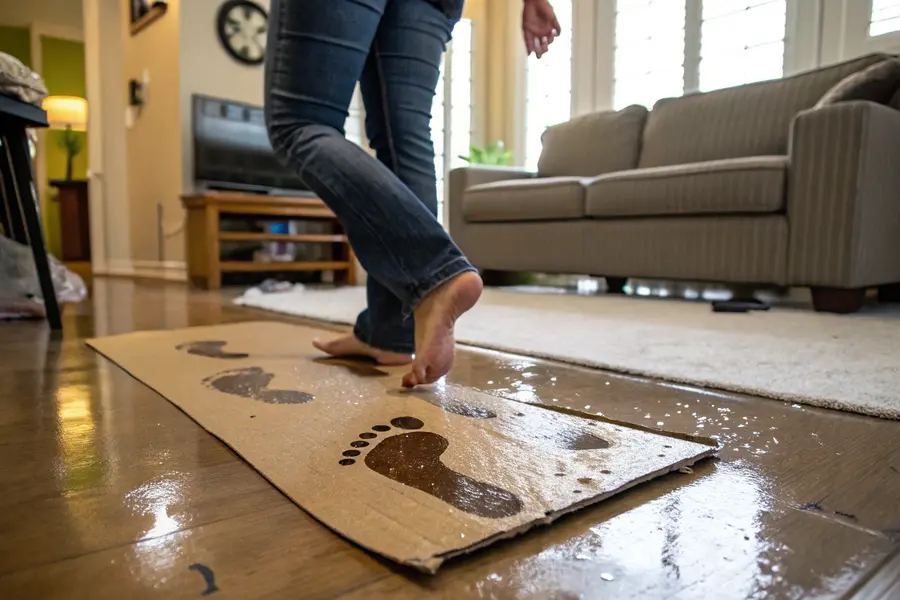
This is really crucial. If you have very flat feet, an arch support that’s super high might feel uncomfortable. It could feel like there’s a golf ball under your foot. On the other hand, if you have a slight arch but still experience pain, you might need more pronounced support to make a difference.Footcool understands this. That’s why we offer low, medium, and high arch insoles. It’s all about finding that ‘just right’ feeling of being supported without feeling any uncomfortable pressure.How to get an idea of your arch height? Sometimes, looking at your wet footprint can give you a clue. If you step out of the shower onto a bathmat or dark tile, look at the print. A full, wide footprint often means a lower arch. A print where the middle part is very thin or missing suggests a higher arch.
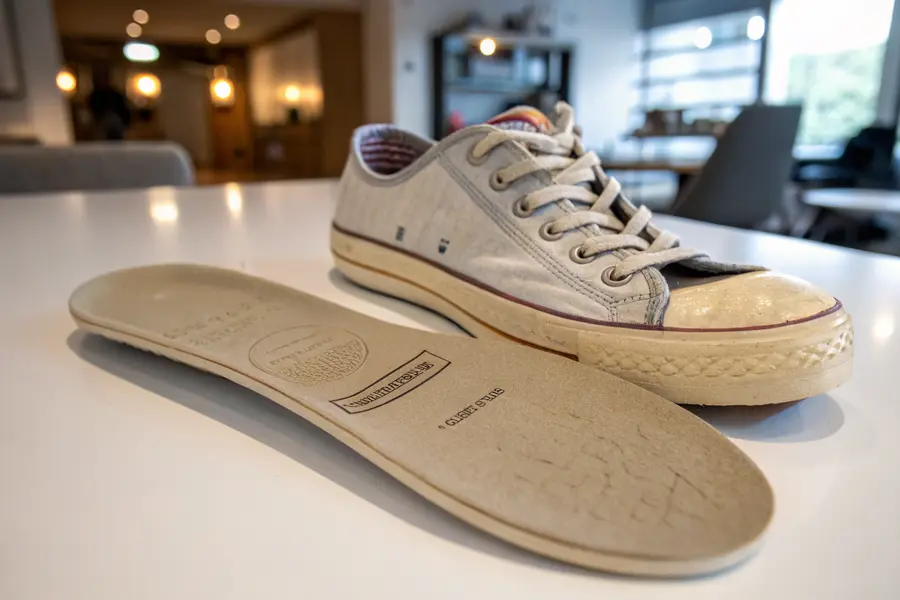
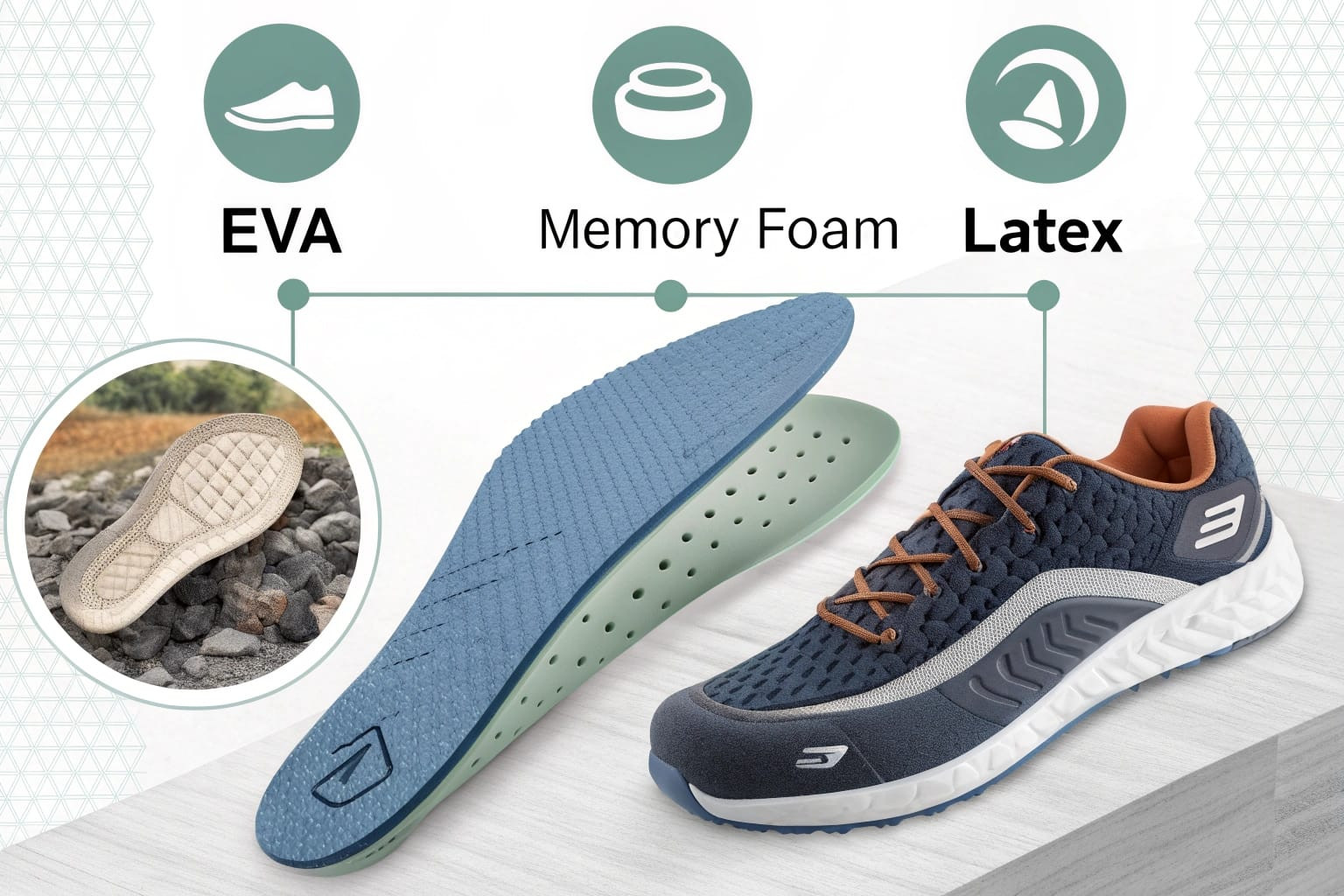
- Material Matters:The material of the insole affects its cushioning, support, and durability. Learn more about EVA vs. Memory Foam vs. Latex and which fits your needs.
- Gel: Often chosen for its superior shock absorption. This is great if you’re standing or walking on very hard surfaces like concrete all day.
- Foam (like EVA foam): Can offer a good balance of cushioning and support. It’s often lighter than gel and can be more breathable. Our Footcool insoles often incorporate advanced foam technologies for optimal comfort and support. Some foams also offer memory characteristics, molding slightly to your foot.
- Cork: Provides firm support. Over time, it can mold to the shape of your foot, offering a more custom-like fit. It’s also quite durable.
- Leather: Very durable and also conforms to the foot over time. It’s a classic material for a reason.
Think about your main priorities: do you need maximum cushioning, better breathability, or firmer, more rigid support?
- Custom vs. Over-the-Counter (OTC):Understand how the transition from generic to custom support is shaping consumer needs.
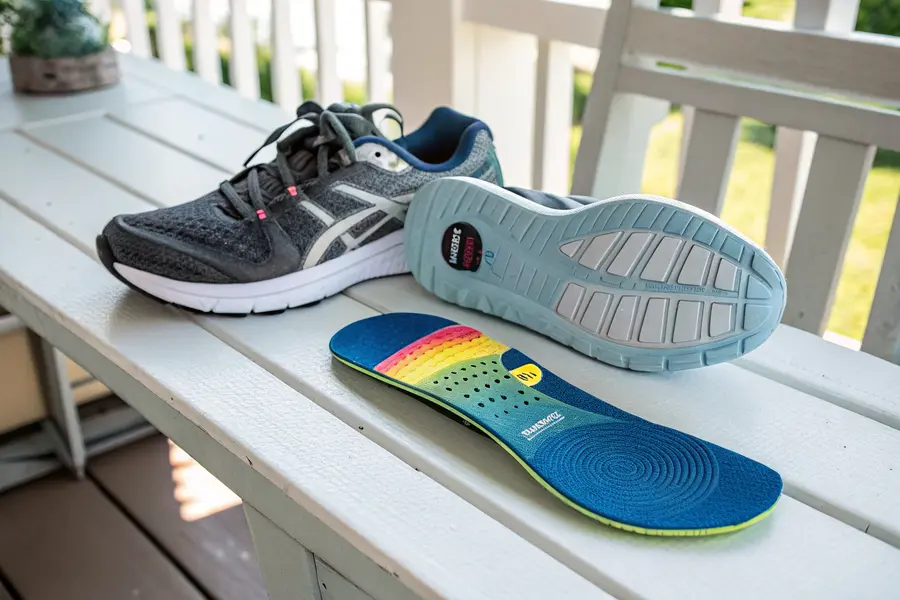
- OTC Insoles: These are the arch supports you’ll find in most pharmacies, shoe stores, or online, like our Footcool range. They are much more affordable and easily accessible than custom options. For many people with mild to moderate flat feet, a good quality OTC insole provides excellent relief and support. They come in various arch heights, materials, and designs to suit different needs.
- Custom Orthotics: These are prescribed by a podiatrist (a foot doctor). They are made specifically for your feet from a mold or a 3D scan. They offer very precise support but are significantly more expensive. Custom orthotics are usually recommended for more severe foot problems, if there are complex biomechanical issues, or if good OTC options haven’t provided enough relief.
I started my journey with OTC insoles, and they made a world of difference for my flat feet and standing job. For many people, this is the best and most cost-effective starting point.
Top Features You Shouldn’t Compromise On
Beyond the basic factors of arch height and material, a few specific features can take an arch support from being just good to being great for all-day standing comfort:
- Full-Length Support is Best:
Some arch supports are just small inserts for the heel or only the arch area. For all-day standing, I strongly recommend choosing full-length insoles. These insoles support the entire foot, from your heel all the way to your toes. This ensures more balanced pressure distribution and continuous support throughout your stride and while standing. The forefoot power transfer layer found in some Footcool designs is an example of this whole-foot approach. - Breathability for Happy Feet:If your feet are stuck inside shoes for 8, 10, or even 12 hours a day, they’re going to sweat. It’s unavoidable. Look for insoles made with moisture-wicking fabrics or that incorporate breathable technologies. This helps to keep your feet drier. Drier feet are less prone to odor (our deodorizing technology is a lifesaver here!). They are also less likely to develop blisters or fungal infections like athlete’s foot.
- Heel Cushioning and Support:Your heel takes a lot of impact with every step, especially on hard workplace floors. A good, deep heel cup in an insole helps to cradle and stabilize your heel. Extra cushioning in the heel area, like our full heel wrap design and heel shock absorption design, can make a huge difference in comfort and reduce jarring.
- Durability:You’re going to be on these insoles all day, every day. So, they need to be tough. Look for quality materials and solid construction that will last. It’s generally better to invest a little bit more in a durable pair of insoles than to have to replace cheap, flimsy ones constantly. This will save you money and hassle in the long run.
A Quick Comparison Table for Choosing Arch Supports
| Feature | Why it’s Important for Standing All Day | Look for in Footcool Insoles |
|---|---|---|
| Correct Arch Type | Tailors support specifically to your foot shape, preventing discomfort | Low, Medium, and High Arch options |
| Cushioning Material | Absorbs shock from hard surfaces, reduces impact on feet and joints | Gel, specialized foams, dynamic support |
| Full-Length Design | Supports the entire foot evenly, balances pressure from heel to toe | This is standard in most of our standing insoles |
| Heel Cup/Support | Stabilizes the heel bone, absorbs impact, improves alignment | Full heel wrap design, shock absorption tech |
| Moisture-Wicking | Keeps feet dry, helps prevent odor, blisters, and fungal issues | Deodorizing & moisture-wicking technology |
| Durability | Ensures the insoles last longer under the stress of daily wear and tear | High-quality construction and materials |
I’ve Got My Arch Supports! How Do I Use Them for the Best Results?
Getting new arch supports is exciting! You’re looking forward to more comfortable feet. But just throwing them into your shoes and hoping for the best isn’t quite the whole story. A little know-how on how to introduce them to your feet and care for them goes a long way to getting maximum benefit.
Introduce new arch supports gradually into your routine. Start by wearing them for just a few hours a day. Make sure they fit well inside your shoes, without bunching. Maintain them by cleaning them regularly and replacing them when they show signs of wear.
Let’s get into the practical steps.
Tips for Adapting – Take It Slow!
Your feet, and even the rest of your body (like your knees and back), need some time to get used to the new support. It’s a bit like breaking in a new pair of shoes, but this adjustment is for your arches and overall foot posture.
- Gradual Introduction is Key:
Don’t just put your new arch supports in your shoes and wear them for your entire 10-hour shift on the very first day. That’s often a recipe for new aches or stiffness. Your muscles, ligaments, and tendons need to adapt to the change in support and alignment.- Day 1-3: Try wearing them for about 2 to 4 hours. See how your feet feel during and after.
- Day 4-6: If the first few days felt okay, increase the wear time to 4 to 6 hours.
- After about a week: You should be able to wear them for your full workday, assuming you haven’t experienced any major discomfort.
Always listen to your body. A little initial awareness of the support under your arch is normal. It might feel different. But if you feel any sharp pain or significant discomfort, take the insoles out and give your feet a rest. Try again for a shorter period the next day.
- Shoe Compatibility Matters A Lot:
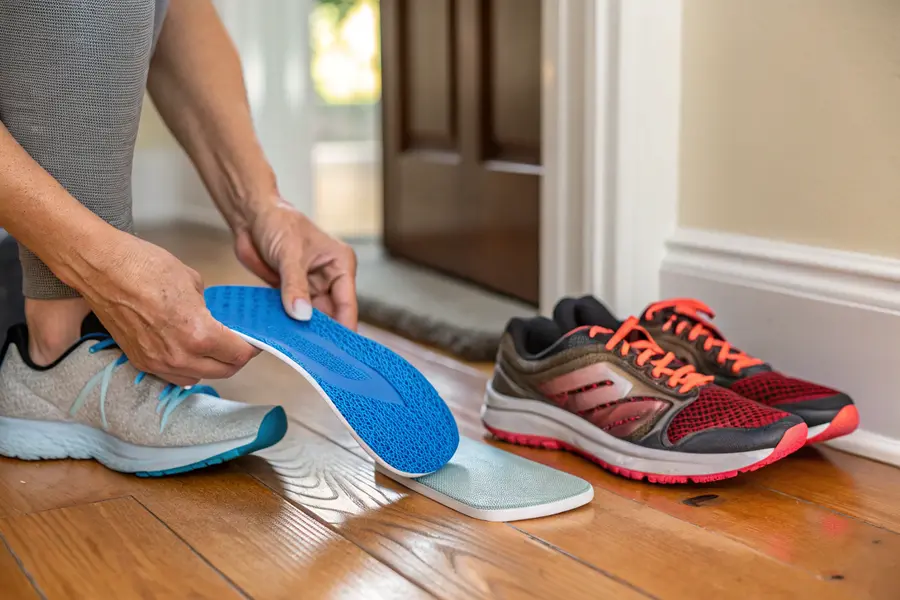
Even the best arch supports won’t do much good if they are in flimsy, unsupportive, or ill-fitting shoes.- Remove Old Insoles First: Always take out the shoe’s original insole (the one that came with the shoe) before putting in your new arch support. Doubling up on insoles can make the shoe too tight, crowd your toes, and mess with the way the arch support is supposed to fit and function.
- Check the Fit Inside the Shoe: The arch support insole should lie flat inside the shoe. It shouldn’t bunch up or slide around too much. Trim-to-fit insoles might need careful cutting to match the outline of your old insole.
- Choose Supportive Footwear: Pair your arch support insoles with shoes that have good structural features themselves:
- A firm heel counter (that’s the back part of the shoe that cups your heel and keeps it stable).
- Enough room, especially in the toe box. Arch supports can sometimes add a little bit of bulk or height inside the shoe. You don’t want your toes to be squished or rubbing.
- Good overall structure. Avoid using your best arch supports in very flexible, worn-out, or broken-down shoes.
- One Pair at a Time (Initially):
If you have multiple pairs of work shoes, it’s best to get used to the insoles in one primary pair first. Once your feet are comfortable with them in that pair, you can then consider getting additional insoles for your other frequently worn shoes. This makes the adaptation process simpler.
Keeping Your Supports in Top Shape: The Maintenance Routine
Like any piece of gear that works hard for you every day, your arch supports need a little bit of TLC to keep them effective and hygienic.
- Cleaning Regularly:Depending on how much your feet sweat and the conditions you work in, aim to clean your insoles every week or two.
- Most fabric-topped or foam insoles can be hand-washed. Use mild soap and lukewarm water. Gently scrub with a soft brush if needed.
- Rinse them thoroughly to remove all soap residue.
- Let them air dry completely before putting them back in your shoes. Don’t try to speed this up by putting them in a clothes dryer or near a direct heat source like a radiator. High heat can damage the materials and affect their shape and supportive qualities.
- Our Footcool insoles with moisture-wicking and deodorizing technology certainly help to keep things fresher for longer, but occasional cleaning is still a good hygiene practice.
- Know When to Replace Them:Arch supports don’t last forever. The cushioning materials compress over time, and the supportive structures can weaken with constant use.
- How long do they last? This really depends on how many hours a day you wear them, your body weight, the intensity of your activity, and the quality of the insole itself. A general guideline for insoles worn daily for many hours is to consider replacing them every 6 to 12 months.
- Signs they need replacing:
- Visible wear and tear: Look for cracks in the material, areas that are obviously flattened or compressed, or fabric that is peeling or torn.
- Reduced cushioning: They just don’t feel as comfortable or as shock-absorbing as they used to.
- Decreased support: You might feel less arch support, or the insole feels flimsy.
- If your old foot pain, knee pain, or back pain starts creeping back in, it could be a sign that your insoles are past their best.
I find it helpful to mark my calendar to check my insoles for wear and tear every 6 months. It’s a relatively small investment to make sure my feet stay happy and supported at work.
When Should I See a Doctor About My Flat Feet Pain, Even With Arch Supports?
Arch supports are fantastic tools, and they help a lot of people. I’m a big fan, obviously! But they’re not a magic cure-all for every single foot problem out there. Sometimes, you really do need to call in the experts – a podiatrist or other healthcare professional.
You should see a podiatrist if you have persistent foot pain that doesn’t improve despite using good over-the-counter arch supports. Also, see a doctor if you notice visible foot deformities like bunions or hammertoes, or if pain is severe.
Let’s pinpoint when professional advice is the next best step.
Red Flags: Time for a Professional Consultation
I’m a big believer in trying to find solutions and self-help where appropriate. But it’s also super important to know your limits and when professional help is needed. Here are some situations where just trying yet another pair of OTC insoles probably isn’t going to be enough:
- Persistent Pain: You’ve bought good quality arch supports (like those from Footcool or a similar reputable brand). You’ve given them a fair trial period, following the advice to introduce them gradually. But your foot pain, knee pain, or related back pain just isn’t getting any better. Or, even worse, maybe it’s actually getting worse.
- Pain That Disrupts Your Life: If the pain is severe enough that it’s limiting your normal daily activities, if it’s waking you up at night, or if it’s making you genuinely dread going to work or doing things you enjoy, that’s a clear signal that something more needs to be done.
- Visible Deformities or Changes in Foot Shape: If you start to notice changes in the shape of your feet, you should get them checked out. This includes things like:
- Bunions (that bony bump that can form at the base of your big toe).
- Hammertoes (toes that start to bend or curl abnormally at one of the joints).
- Ankles that seem to roll inwards excessively, even when you’re just standing still.
- One foot looking significantly flatter or different from the other.
- Numbness, Tingling, or Burning Sensations: These types of sensations in your feet or toes could indicate nerve issues. These need professional assessment to figure out the cause.
- Pain Following a Sudden Injury: If your foot pain started suddenly after a specific incident, like a fall, a twist, or dropping something on your foot, it’s important to get it checked out to rule out fractures or other acute injuries.
What Can a Podiatrist Do for You?
Podiatrists are doctors who specialize in the foot, ankle, and related structures of the leg. They are the go-to experts when it comes to diagnosing and treating all sorts of foot and ankle problems.
- Comprehensive Assessment: A podiatrist will do much more than just quickly look at your feet. They will typically:
- Take a detailed medical history, asking about your symptoms, lifestyle, job, and any previous injuries or conditions.
- Perform a thorough physical examination of your feet, ankles, and lower legs. They’ll check your range of motion, look for areas of tenderness, and assess your circulation and nerve function.
- Analyze your gait (how you walk) and your standing posture. Some podiatrists use advanced tools like pressure plates or video gait analysis to get a really detailed picture of how your feet function when you move.
- They can accurately diagnose the specific cause of your flat feet (e.g., flexible vs. rigid, any underlying conditions like posterior tibial tendon dysfunction) and any related issues.
- Treatment Options: Based on their findings, a podiatrist can offer a range of tailored treatment options:
- Prescription Custom Orthotics: If high-quality OTC insoles aren’t providing enough relief or if your condition is more complex, they can prescribe custom-made orthotics. These are created from a precise mold or 3D scan of your feet. They offer a very specific, tailored level of support and correction. Learn more about how visualizing production processes is revolutionizing custom orthotic insoles. They are particularly helpful for severe flat feet, significant biomechanical issues, or certain foot conditions that require precise control.
- Specific Exercises or Physical Therapy: They might recommend a program of stretches and strengthening exercises for the muscles in your feet and lower legs to improve support and function.
- Footwear Advice: Podiatrists can give very specific recommendations for the best types of shoes for your particular foot type, your job requirements, and your activities.
- Other Treatments: In some cases, they might suggest other treatments such as injections (e.g., cortisone for inflammation), bracing, or, in rare and severe cases where other treatments have failed, surgical options.
I actually consulted a podiatrist myself years ago when my foot and knee pain was really bad. That consultation helped me understand my specific needs much better. Even though I now primarily use high-quality OTC insoles from our Footcool line for my daily comfort and support, that initial professional advice was invaluable in setting me on the right path.
Conclusion
For workers with flat feet who stand all day, the right arch support often means the difference between daily pain and comfortable productivity. It is a key strategy for well-being.
So, let’s sum it up. If you’re on your feet all day and dealing with the discomfort of flat feet, please remember this: arch support isn’t just some minor comfort item. It’s a vital tool that can truly transform your workday. It can change your day from feeling like an endurance test into something much more manageable and comfortable.
Don’t let foot pain, knee pain, or back pain hold you back from doing your job well or enjoying your life. Explore good quality arch support options, like those we are proud to offer here at Footcool. Read more about arch support for flat feet options. And don’t hesitate to consider consulting a specialist, like a podiatrist, if you feel you need more personalized advice or if your pain is persistent. Prioritizing your foot health is a real investment in your overall well-being and your ability to perform at your best. Your feet will definitely thank you for it!